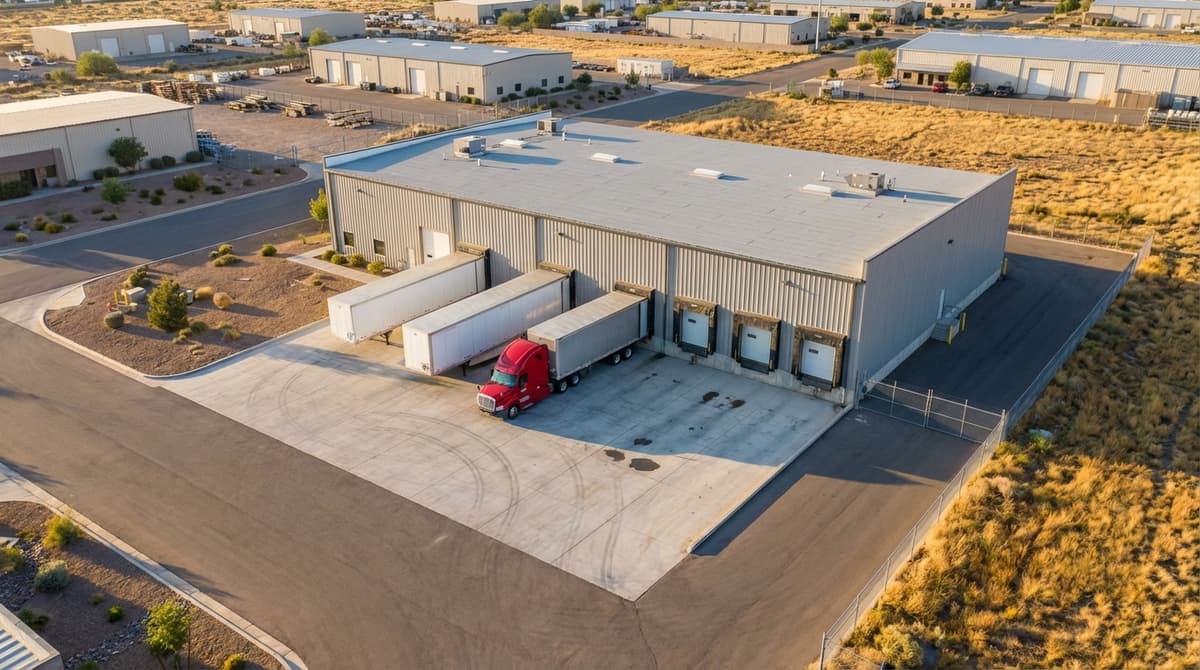
Detention fees are the silent budget killer for lean warehouse operations. Every truck that sits beyond the allowed free time triggers a charge — typically $50-300 per event — and for warehouses handling 3-15 trucks per day, those charges compound fast.
The math is brutal: just 2-3 detention events per week at $150 each adds up to $1,200-1,800 per month. Over a year, that's $15,000-22,000 in avoidable costs. For teams that “run labor close to the bone,” that money could fund equipment, training, or additional seasonal capacity.
The good news is that detention fees are almost entirely a scheduling problem — and scheduling problems have solutions. Here are four strategies that warehouses are using to eliminate detention charges without adding headcount.
Why Detention Fees Happen (It's Not What You Think)
Most warehouse operators assume detention fees are caused by slow unloading. But in practice, the biggest driver is what happens before the truck reaches the dock door: waiting in the yard because too many trucks arrived at the same time.
Arrival clustering. When scheduling happens via email and phone, there's no shared view of who's arriving when. Carriers naturally cluster in the mornings — three trucks show up at 8 AM when your dock can handle one. Two of those trucks sit idle, and the detention clock starts ticking. The FMCSA has identified driver detention as a significant industry cost driver that affects safety and productivity across the supply chain.
Manual check-in delays. Even after a truck arrives, the traditional check-in process adds 5-10 minutes per truck. As one dock manager described it: “Stop what you're doing, walk over, check them in.” When three trucks arrive simultaneously, that's 15-15 minutes of sequential check-in time while the other trucks wait.
Limited scheduling visibility. Many operations can only schedule about a week ahead. Without longer-term visibility, you can't spread volume across the week or staff appropriately for heavy days. Carriers grab whatever slot they can, and your dock plan falls apart.
4 Strategies to Eliminate Detention Fees
1. Replace Email Scheduling with Structured Appointments
The single highest-impact change is moving from ad-hoc email/phone scheduling to structured appointment slots. When every truck has an assigned window, you eliminate the arrival clustering that causes most detention events.
Structured dock scheduling means your team knows exactly who's coming and when. You can prep the right dock door, allocate labor appropriately, and prevent the cascading delays that trigger detention charges. Warehouses that implement structured scheduling typically see detention events drop by 70-85% in the first month.
The critical success factor is ease of use. If the scheduling system requires an IT project to implement, it won't happen. Look for something your operations team can configure themselves — ideally in under an hour.
2. Enable Carrier Self-Booking
Half the problem with email scheduling is the coordination overhead. You send available times, the carrier responds with conflicts, you go back and forth, and eventually a time gets confirmed — maybe. Meanwhile, the carrier books with another facility that was easier to schedule with.
Link-based carrier booking eliminates this entirely. You share a booking link, carriers see your available slots, and they self-book. No portal to learn, no login to remember. Carriers describe this as “one less pain point.”
The detention fee impact is immediate: when carriers can see available capacity and pick their own slot, they naturally distribute across your schedule instead of clustering. And because they've committed to a specific time, on-time arrival rates improve dramatically.
3. Implement Self-Service Driver Check-In
Manual check-in is a hidden detention accelerator. Every time a dock worker has to stop loading to check in a driver, it delays the truck currently being processed — which pushes the next truck closer to detention.
QR-based self-service check-in solves this. The driver scans a code on arrival, the system logs their timestamp, and the dock team gets notified without interrupting their current work. Check-in goes from 5-10 minutes to under 60 seconds, and your dock crew stays productive.
The timestamps also create accountability. You'll know exactly when each truck arrived and when it was assigned a door — data that's invaluable for disputing unjustified detention claims from carriers. The same timestamp trail works outbound too, if you need to track carrier pickup compliance on customer-routed freight.
4. Extend Your Scheduling Window
If you can only see a week ahead, you're always reactive. Carriers fill slots on a first-come basis, heavy days build up without warning, and your team scrambles to catch up.
Warehouse operators who've extended their scheduling window call it “huge.” When you can manage capacity 2-3 weeks out, you can proactively spread volume across the week, identify and prevent bottleneck days before they happen, and staff appropriately for known demand.
For small warehouse operations handling 3-15 trucks per day, even a two-week scheduling window transforms capacity planning from guesswork to precision.