Every warehouse dock has the same underlying problem: too much variability for too little buffer. Trucks arrive whenever, not when you planned. Your lean team scrambles. A detention window ticks down. By the end of the day, you've lost 2-3 hours of productive dock time to things that were all preventable.
The good news is that dock best practices are well-known, well-tested, and don't require enterprise budgets to implement. This guide covers the specific operational practices that warehouses running 3-50 trucks per day are using to cut wait times, reduce detention, and get back dock-team hours. Every section is written from operator experience — we run these in our own warehouses at Productiv.
1. Structured Appointment Scheduling Is the Foundation
Before any other dock best practice, you need structured appointments. If carriers can still call, email, or show up unannounced, none of the downstream practices matter — the variability will overwhelm them.
Structured scheduling means: every truck has a specific arrival window, capacity is capped per hour and per dock door, and the system prevents double-bookings automatically. This eliminates the arrival clustering that causes most dock congestion. For the full tactical guide to implementing structured scheduling, see how to reduce truck wait times with 5 dock best practices.
2. Self-Service Carrier Booking Kills the Coordination Tax
Most dock offices spend 1-2 hours per day on scheduling coordination — inbound calls, outbound confirmations, email chains to find a mutually-agreeable slot. All of that time is coordination overhead, not actual work.
Self-service booking eliminates the tax. Carriers pick their own slot from your real-time availability, and they're confirmed instantly. The key best practice: use link-based booking instead of a portal login. Portals require account creation and training; links work the first time. Adoption is the difference between 90% of carriers self-serving and everyone still calling the dock office. See the ProDocks carrier booking approach for how this works in practice.
3. Self-Service Driver Check-In Stops the Dock Interruption Cascade
Every manual check-in eats 5-10 minutes of dock team time. Driver arrives, finds someone, interrupts them, logs the arrival, gets directed to a door. For a warehouse handling 10 trucks a day, that's 50-100 minutes of productive dock time lost to reception duties.
QR kiosk check-in is the best practice. Drivers scan a code from their appointment confirmation email, the system validates the appointment, logs the timestamp, and assigns a door — all in under 2 minutes. The dock team gets a notification but doesn't have to leave their station. For warehouses running 3+ trucks/day, this single change typically recovers 5-10 hours of dock-team productivity per week. See how the ProDocks QR kiosk check-in works.
4. Extend Scheduling Visibility Beyond 7 Days
Many operations are stuck on 7-day scheduling windows, which forces reactive labor planning and creates a constant cycle of last-minute scrambling. Extending to 14-21 days of forward visibility is a best practice for three reasons: (1) you can staff for heavy days proactively, (2) you can spread volume across the week rather than letting carriers cluster on Mondays and Fridays, and (3) you prevent the pattern where carriers grab whatever slots are left at the last minute, which tends to overload your worst hours.
Warehouse operators who've extended their scheduling window describe it as “huge” because it shifts the entire operating rhythm from reactive to proactive. The mechanical requirement is a scheduling system that lets you set extended booking windows — many legacy systems cap you at 7 days, which is part of why they don't fix the planning problem.
5. Track Dwell Times Digitally — and Act on the Data
The final best practice is measurement. If you don't track dwell time (arrival to departure) with clean digital timestamps, you can't tell whether any of the other practices are working. Manual dwell-time tracking (paper logs, spreadsheet entries) produces unreliable data and is rarely used for actual decisions.
When dwell time is captured automatically at QR check-in and at unload completion, patterns become visible. Maybe certain carriers consistently run 90-minute unloads when the average is 45. Maybe your Tuesday morning slot is always a bottleneck. Maybe one dock door consistently processes faster than others. This data turns dock improvement from guesswork into targeted change.
6. Prevent Detention Fees Through Arrival Windows
Detention fees typically kick in after 1-2 hours of free time. The fastest way to prevent them is to eliminate the arrival clustering that causes dock backups in the first place. When trucks arrive at specific scheduled slots rather than whenever they like, dwell time drops, and free-time windows are rarely exceeded.
For operations with persistent detention problems, the best practice is a two-step audit: first, measure the actual detention events per 10 trucks/day of volume (anything above 2/week indicates a scheduling problem, not a carrier problem). Second, implement structured scheduling and measure again at 30 days. Warehouses using ProDocks typically see detention events drop 85% within the first month. See the deep-dive on detention fee prevention.
7. Give Carriers Visibility Before and After the Appointment
Best-in-class dock operations send carriers automatic confirmations at booking, reminders 24 hours and 2 hours before the appointment, and completion notifications with BOL images attached. This isn't a nice-to-have — it directly reduces no-shows and cuts the phone calls from carriers asking for status updates.
8. Capture BOLs Digitally at the Dock
Paper BOLs get lost, photographed poorly, or delayed for days between the dock and the office. Best practice is to capture BOLs digitally at the moment of unload — photo or scan attached directly to the shipment record in the dock system. This eliminates the “where's the BOL from last Thursday” problem and creates a clean audit trail for disputes.
9. Score Carriers and Act on the Data
Once you have clean arrival and dwell-time data, use it. Best practice is a simple carrier scorecard: on-time arrival %, average dwell time, damage/exception rate. Share the scorecards with carriers quarterly. For carriers at the bottom of the list, either renegotiate service expectations or replace them. For carriers at the top, give them the best slots.
10. Keep It Simple — Complex Tools Kill Adoption
The final dock best practice is an anti-pattern: don't let tool complexity kill adoption. Many enterprise dock scheduling platforms are so feature-heavy that operations teams never actually use them. The features that move the needle — appointment scheduling, carrier self-booking, QR check-in, dashboards — are usable on their own. Yard management, freight procurement, and Eagle View mapping are separate tools and don't have to come bundled.
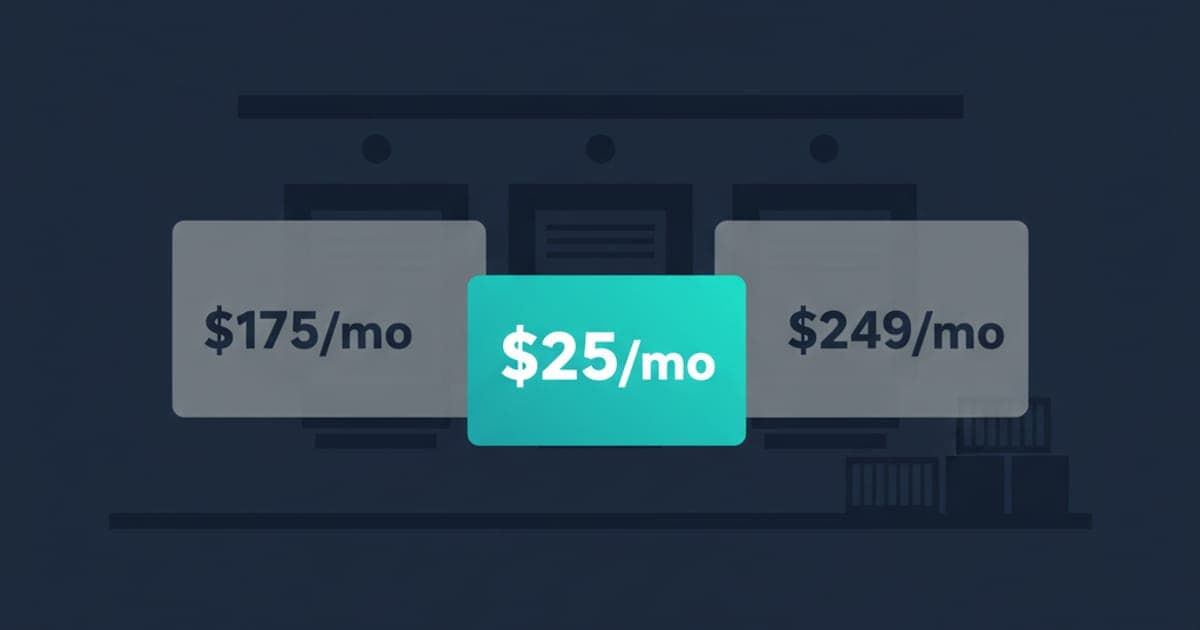
For most 3-50 truck/day warehouses, a right-sized tool is the best practice. ProDocks was built for exactly this scenario: dock scheduling that's free for a single warehouse, live in 15 minutes, no IT involvement. If your current tool takes weeks to configure and half your team has never logged in, the tool is part of the problem.