Most warehouses run their dock the same way: trucks show up, they get worked in order of arrival. First come, first served. It's simple, it requires no system, and it's how things have always been done.
It's also one of the most expensive ways to operate a dock — and most teams don't realize it until they start adding up the numbers.
What Is FCFS Dock Scheduling?
FCFS stands for first come, first served. In dock operations, it means carriers and drivers arrive at your facility without a pre-assigned time slot. Your team works them in the order they show up.
There's no booking process. No coordination ahead of time. Drivers pull into the yard, join whatever informal queue exists, and wait until a door opens up.
For small operations, FCFS feels manageable — even natural. Your dock team knows most of the drivers. You handle what comes in. It works until it doesn't.
The Real Costs of Running FCFS
FCFS looks free because it requires no software and no process change. But it shifts costs to other parts of your operation — costs that are easy to miss because they're spread across detention invoices, overtime hours, and lost carrier relationships.
1. Detention Fees You Can't Control or Dispute
Detention fees — the charges carriers bill when their driver waits beyond the free time window (typically 1–2 hours) — are almost entirely a function of how your dock is managed. When trucks arrive randomly and wait in an uncontrolled queue, dwell times are unpredictable. Drivers sit. Detention fees accumulate.
Worse, FCFS gives you no documentation to dispute these fees. Without an arrival timestamp and a record of when unloading started, you have no way to prove your dock was clear when the driver arrived. You pay the invoice.
2. Labor That Can't Be Planned
When you don't know when trucks are arriving, you can't plan your dock labor. Two trucks show up at 7am and three don't arrive until 3pm — now you're either overstaffed in the morning or scrambling to cover the afternoon. Overtime gets burned on arrivals that could have been spread across the day.
For lean operations running close to minimum staffing, unplanned volume spikes aren't just an inconvenience. As one warehouse operator put it: “If two containers show up unexpectedly, it blows us out of the water.”
3. Dock Team Interruptions
In a FCFS operation, every driver who arrives needs to be manually checked in. Someone on the dock team stops what they're doing, walks to the gate, verifies the driver, records the arrival, and assigns a door. Do that 10–15 times a day and you've consumed an hour or more of productive dock labor on administrative check-ins.
4. No Visibility for Customers or Management
FCFS gives you no advance picture of the day. Your customers don't know when their freight will be received. Management can't see dock status without walking the floor. If a customer calls asking about a delivery, your team is either guessing or going to physically check.
5. Carrier Relationships Degrade Over Time
Drivers talk. Carriers track dwell times. When your dock is consistently unpredictable — when drivers sit in the yard for two hours because they happened to arrive at the wrong time — carriers remember that. Over time, your facility develops a reputation as a hard stop. Carriers deprioritize it.
What Appointment-Based Scheduling Changes
Appointment scheduling doesn't mean your dock becomes bureaucratic or inflexible. It means carriers are given a booking link, they choose an available time slot based on your rules, and both sides know when the truck is expected.
Controlled Arrival Spread
Instead of random bunching, appointments distribute arrivals across your available doors and hours. If you have four dock doors and receive 12 trucks a day, appointments let you schedule 3 per door with breathing room between. Your team isn't idle at 8am and overwhelmed at 2pm.
Timestamped Detention Protection
When a carrier books an appointment, the system records the appointment time. When the driver checks in via QR code, the actual arrival is timestamped automatically. When a detention fee shows up on an invoice, you have the data to dispute it: “Your driver arrived 45 minutes late to their 10am appointment. Our dock was clear and ready. Here's the timestamp.” That's a dispute you can win.
Labor You Can Staff Around
When you know 6 trucks are arriving between 8am and noon and 4 more between 1pm and 4pm, you can staff accordingly. Overtime isn't triggered by a 3pm surprise arrival from a carrier who decided today was convenient.
Self-Service Check-In
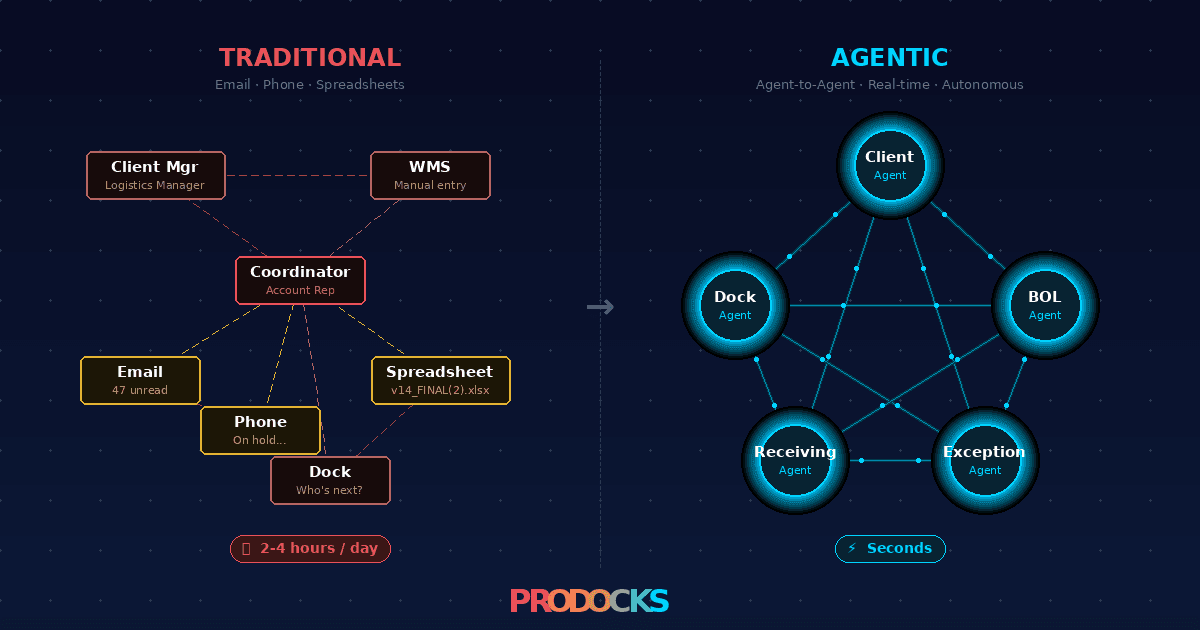
Drivers receive a QR code in their confirmation email. They scan it at your gate kiosk on arrival. The system timestamps the arrival, identifies the shipment, notifies the dock team, and updates the live dock board — without anyone stopping to process them. Your dock team is never interrupted by a driver showing up. They find out a truck has arrived the same way they'd get a text message.
Advance Visibility
Your team starts every day with a full picture of what's coming. Management can see the dock board without walking the floor. Customers get notified at each milestone automatically. Carriers know exactly when their window is and which door they're going to.
The Common Objections
“Carriers won't schedule appointments.”
This is the most common concern — and the most overstated. Carriers deal with dock appointments at almost every major retailer and distribution center they work with. What they hate is friction: creating accounts, logging into portals, navigating systems they've never seen.
Link-based booking removes that friction entirely. Your carrier gets a link. They click it, pick a slot, and receive a confirmation with their QR code. No login. No app. No training. Adoption follows quickly because it's not harder than sending a text.
“We don't have the volume to justify a system.”
If you're handling more than five trucks a day, you have enough volume to benefit from appointments. The problem isn't volume — it's unpredictability. Even a small dock running six trucks a day can waste an hour of labor and generate a detention fee dispute from a single unplanned arrival cluster.
“We've always done it this way and it mostly works.”
FCFS mostly works until you add it up. The detention fees you're not disputing. The overtime from unplanned peaks. The hour a day your team spends on check-in admin. These costs don't show up as a line item labeled “cost of running FCFS.” They're buried in labor costs, carrier invoices, and time your team isn't getting back.