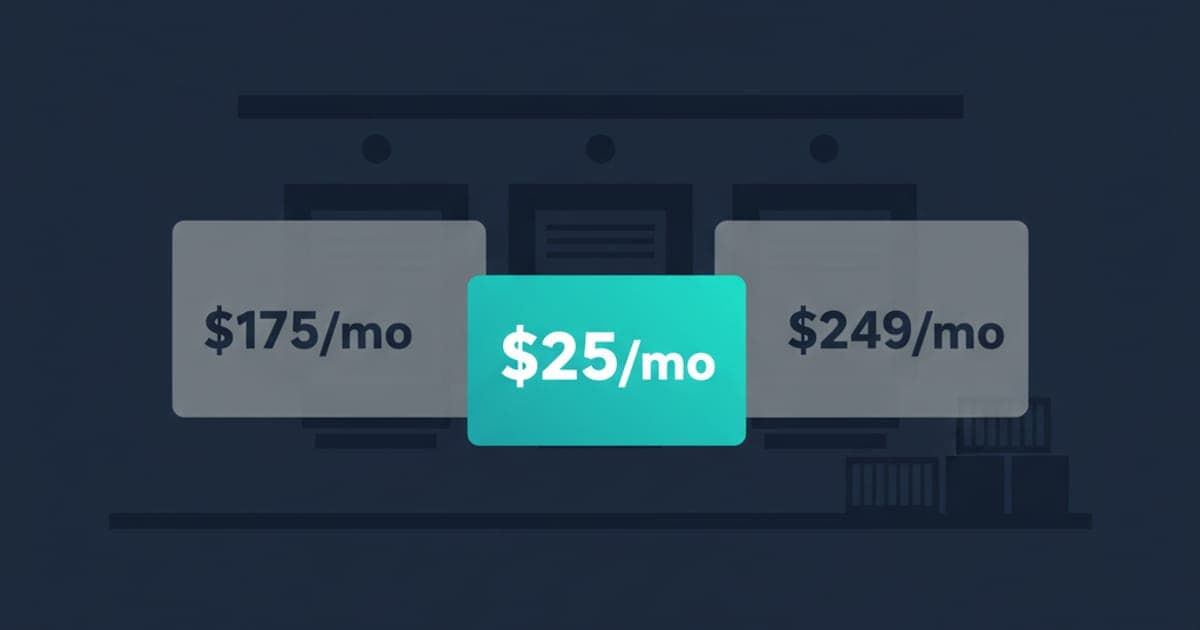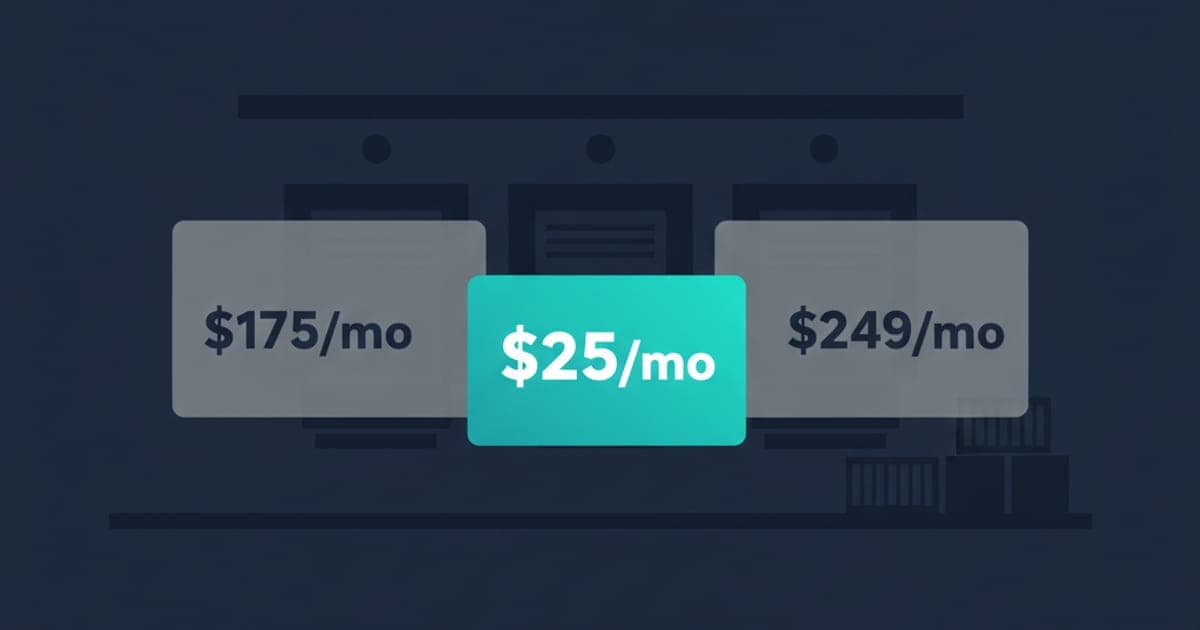
Update, April 2026: We originally published this post explaining why we charged $25/month instead of enterprise rates like the competitors. Since then we made a bigger change: the core product is now permanent and free for single warehouses. The $25 tier still exists, but it's now per-warehouse and only kicks in when you add sites or need analytics. The philosophy behind both is the same — this post explains it.
ProDocks is free for a single warehouse. Every other tool in this category is enterprise-priced or requires a custom quote — we've broken down what dock scheduling software actually costs in 2026 if you want the full market picture. And we open sourced the code under ELv2 — any warehouse can run their own instance for free.
That's not a promotional price. It's not a loss leader. It's what dock scheduling software should cost when it's built by people who actually run docks — and when AI has collapsed the cost of building it.
Software Prices Are Going to Come Down. Ours Already Did — Twice.
The dirty secret of enterprise software pricing is that most of the cost has nothing to do with the software itself. You're paying for a sales team, a customer success team, an implementation team, a support tier structure, and the overhead of a company built around selling software to other companies.
AI is dismantling that cost structure. Agentic workflows that used to require engineers now run for fractions of a cent. Features that would have taken months to build take days. The marginal cost of software is approaching zero — and pricing should follow. Most software companies won't lower prices voluntarily. They'll capture the AI productivity gain as margin. We can price differently because we're not primarily a software company.
The first price drop (launch at $25/month) was about acknowledging that AI-era build costs should translate into customer savings. The second drop (to free for single warehouses) was about going further: most single-warehouse operations shouldn't be paying for dock scheduling at all. The paid tier is now scoped to where paid value genuinely exists — multi-warehouse management, analytics, compliance reporting.
We're a Warehouse That Built Software — Not a Software Company That Sells to Warehouses
Productiv runs 14 operations — five warehouses plus nine embedded operations nationwide. Every one of them has a dock, carriers to coordinate, and receiving labor to plan.
We built ProDocks because we had a real dock scheduling problem. No existing software was right-sized for an operation like ours — everything was either a spreadsheet or an enterprise system priced for a mega-DC. So we built it ourselves, proved it out in our own facilities. At our Patriot Drive warehouse in Dallas, receiving ran with 25% fewer FTEs after go-live (methodology).
The overhead that went into building ProDocks isn't a sales team or a product org. It's running real warehouses, solving real problems, and deploying software that has to work because we depend on it ourselves. That overhead doesn't get baked into ProDocks pricing because it was already paid for by our operations.
We're not subsidizing a software business. We're opening up the tool we built and get our return on by using it internally. That's why the Free tier can genuinely be free — we aren't funding a venture-scale software P&L with your subscription.
Don't Pay for Features You Don't Use
Enterprise dock scheduling software was built by IT companies for IT buyers at enterprise DCs. It shows. You get yard management modules, license-plate gate scanning, complex carrier network infrastructure, multi-layer administrative controls, enterprise integration frameworks, and compliance reporting dashboards — all designed for operations running 50+ trucks a day with a full IT department.
If you're running 3–15 trucks a day at a 3PL or mid-market DC, you're paying for all of that. Whether you use it or not.
ProDocks was built by operators who asked a different question: what are the features that actually protect a lean dock plan? Appointment scheduling. Link-based carrier booking. QR driver check-in. BOL capture. Real-time dashboard. Automated notifications. That's the list. Everything else was left out on purpose, which is how we can give it away free to single-warehouse operations.
When $25/Warehouse Actually Earns Its Price
So when does the paid tier make sense? Two scenarios, and only these two:
When you add a second warehouse. The moment you're running two sites, you want one dashboard across both — consolidated reporting, per-site rules, role-based access. That's genuinely more operational work, and that's where the paid tier earns its price. Each additional warehouse is $25/month.
When you need analytics. The Free tier includes a real-time dashboard. The Multi-Warehouse tier adds historical analytics: dwell time tracking by carrier, dock utilization over time, weekly throughput charts, carrier scorecards, exception pattern detection. If you want to measure and improve dock performance beyond “what's happening right now,” that's the paid tier.
Don't Pay for Corporate Overhead That Has Nothing to Do With Your Dock
When you buy GoRamp or DataDocks, a significant portion of your monthly fee goes to things that have nothing to do with scheduling your dock: the enterprise sales cycle that closed your deal, the implementation team that onboarded you, the account manager who checks in quarterly, the support tier structure, the marketing budget.
That's how software companies work. It's a legitimate model. But it means you're paying for an organization, not just software. ProDocks doesn't have that structure. There's no enterprise sales team. There's no implementation team because the product sets up in 15 minutes. There's no account management because the software is simple enough that you don't need one. The cost of running ProDocks as a product is low — and so is the price.
We're Open Sourcing It
Productiv's mission is to make supply chains more productive. Not just our clients' supply chains — everyone's. If a warehouse can run ProDocks on their own infrastructure at zero cost, and it makes their dock more efficient, that's the mission working.
ProDocks is open source under the Elastic License 2.0. Any warehouse can clone the repo, add their own Supabase credentials, and run a full instance of ProDocks on their own infrastructure. The code you'd deploy is the same code running on our docks right now. The one restriction: you can't offer ProDocks as a hosted or managed service for others. Internal use is completely free.
If you want managed hosting, automatic updates, and a product that's supported — that's what the Free tier is for. And if you have multi-warehouse or analytics needs, the $25/warehouse/month tier earns its price there.
Dock Scheduling Software Pricing Compared
Based on published Capterra data as of March 2026: