Dock scheduling software pricing in 2026 spans $0 to $5,000+ per month. That range isn't a typo. It reflects a category where the same nominal product (appointment scheduling, carrier portal, driver check-in, dashboard) gets sold to two very different buyers: small-to-mid warehouses running 3–15 trucks per day, and enterprise distribution centers running 50+ with full yard management. The pricing models reflect those buyers, not the underlying software cost.
If you're evaluating dock scheduling software and the pricing feels confusing, that's by design. Most enterprise-priced vendors don't publish numbers because their pricing is built for the buyers they actually want, and disclosing it would discourage the smaller traffic that lands on their site by accident.
The Pricing Landscape
Here's what dock scheduling software actually costs in 2026, by tier:
$0/month — single-warehouse free tier. ProDocks offers a Free tier with the full core product (scheduling, carrier portal, QR check-in, BOL capture, dashboard, notifications) for single-warehouse operations. No credit card, no trial clock. This is the only genuinely-free option in the category — others labeled “free” are time-limited trials or feature-throttled lite editions.
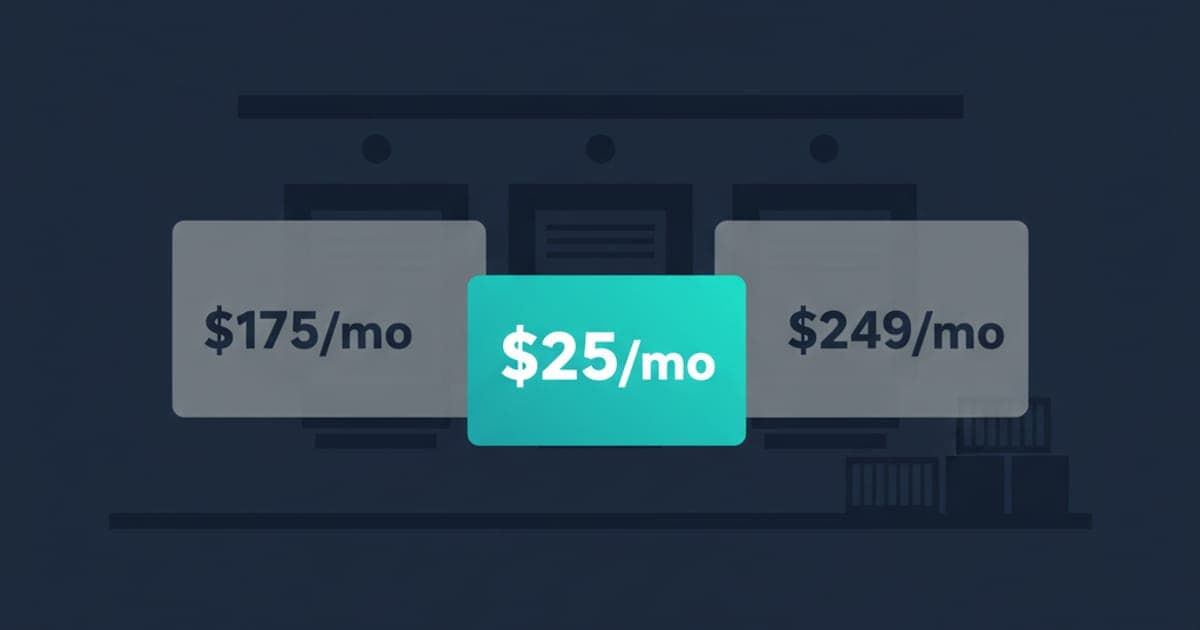
$25–$100/warehouse/month — small-to-mid market. Once you need multi-warehouse management or analytics (dwell time, utilization, carrier scorecards), the paid tier kicks in. ProDocks charges $25/warehouse/month for this. Other tools positioned for similar volume tend to be in the $50–$100/warehouse range. You should not pay more than $100/warehouse/month for what amounts to dock scheduling at this volume.
$500–$5,000+/month — enterprise tier. OpenDock, GoRamp, DataDocks, C3 Reservations, and similar enterprise platforms operate here. They bundle dock scheduling with yard management, license-plate scanning, gate-attendant workflows, freight procurement, EDI gateways, and multi-layer admin controls. None of them publish pricing. Capterra and similar review sites estimate them in the $500–$5,000+/month range depending on configuration. That pricing is justified for operations running 50+ trucks/day with full yard management — and entirely wrong for operations that don't.
Fair-Market Pricing for Your Volume
Volume drives pricing more than any other variable. Use this as a quick test:
1–3 trucks/day, single warehouse. You probably don't need software yet. Spreadsheets and email work at this volume — barely. If you do want software, free is the right price.
3–15 trucks/day, single warehouse. This is the sweet spot for the Free tier of dock scheduling software. You need appointment scheduling, carrier self-service, QR check-in, and a real-time dashboard. You don't need yard management. Anything you pay above $0 at this volume should be for very specific needs (analytics, compliance reporting) — and even those should run $25–$50/month at most.
3–15 trucks/day, multi-site. This is where the $25/warehouse/month tier earns its price. You want one dashboard across sites, consolidated reporting, role-based access. ProDocks at $25/warehouse means a 3-site operation runs $75/month. Comparable tools positioned for this segment run $150–$300/month for the same configuration.
15–50 trucks/day, single or multi-site. The mid-market. Most teams here can still use small-to-mid market tools, paying $25–$100/warehouse/month. The exception is if you have specific yard-management or freight-procurement needs that justify the enterprise tier.
50+ trucks/day, single site, full yard management. Enterprise. OpenDock, GoRamp, DataDocks, C3 Reservations are appropriate, and their pricing is justified for your scale. This is not where ProDocks fits.
Hidden Costs That Add 30–100% to the Headline Price
The list price isn't the real price. Watch for these four hidden costs:
Implementation fees. Enterprise dock scheduling tools typically charge $5K–$25K for “onboarding” or “setup” — IT integration, training tiers, configuration consulting. ProDocks deliberately doesn't have implementation fees because the product sets up in 15 minutes without IT.
Annual contract minimums. Many enterprise tools require 12-month commitments. If the product doesn't work for you, you're still paying. Look for month-to-month options if you're not yet sure.
Per-carrier or per-driver surcharges. Some pricing models scale with your carrier network or driver count. If you have 200 carriers across 50 lanes, per-carrier fees alone can dwarf the base subscription. Look for flat per-warehouse pricing.
Mandatory training tiers. Some vendors require paid certification programs to fully use the software your team is already paying to license. The dock team needs to be productive on day 1, not certified by week 6.
The Honest Test
Here's the test for whether you're being overpriced: am I paying for features I don't use?
If you run 15 trucks per day and you're being quoted $300/month for dock scheduling, a meaningful chunk of that is the platform's yard management module, freight procurement infrastructure, EDI gateway, license-plate scanning capability, and gate-attendant workflows — none of which you use. You're funding a feature footprint built for someone else's warehouse.
The category has tools positioned for your volume specifically. ProDocks is the most aggressive on price (free for single warehouse, $25/warehouse for multi). The Free tier covers the full core product permanently — no credit card, no trial. The $25 tier triggers only on multi-warehouse needs, analytics, or compliance reporting.
For comparison details against the major enterprise tools, see ProDocks vs. OpenDock, vs. GoRamp, vs. DataDocks, and vs. C3 Reservations. Each comparison page has the side-by-side feature and pricing breakdown.